Traumatic Injuries in Evanston, IL
When a tooth is knocked out, dislodged, or broken, fast action matters. The sooner you get expert care, the better the odds of saving that tooth. Dr. Andre Amarante at Way Dental is trained in emergency treatment for every kind of dental trauma, from a tooth shoved out of position to one knocked out completely. For complex cases, we may refer you to a trusted specialist, such as an endodontist, to give your tooth the best possible chance of recovery. If you or a family member has suffered a dental injury, call us immediately, or see our emergency dentistry page for what to do next.
What it is
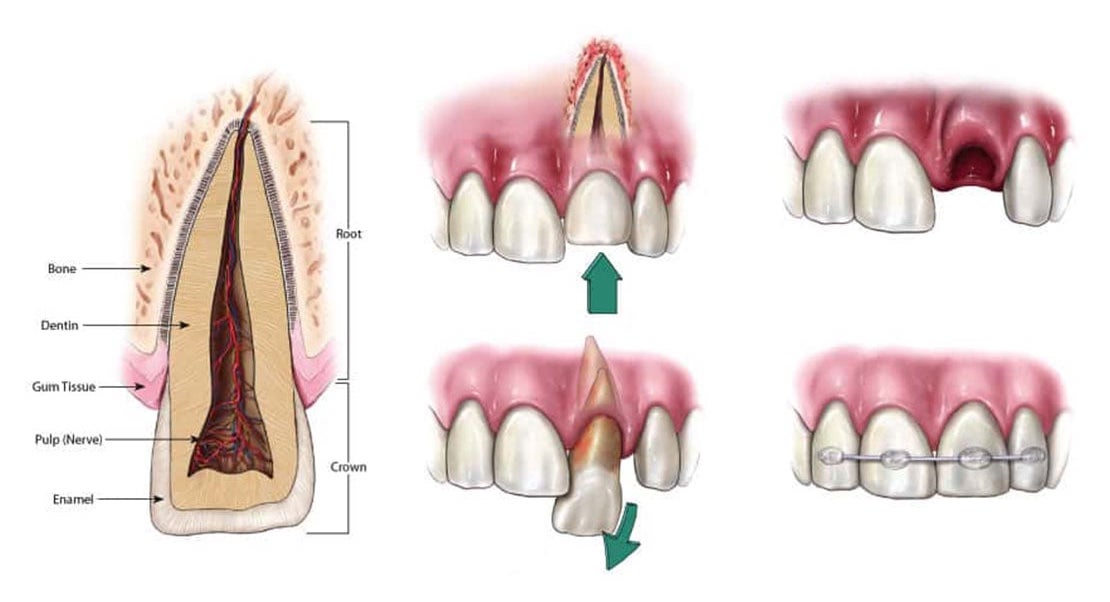
Any injury that displaces, loosens, fractures, or knocks out a tooth. Sports, falls, accidents, and biting into something unexpectedly hard are common culprits.
Who it's for
Children, teens, and adults alike, anyone whose tooth has been knocked out, pushed out of position, cracked, or loosened by an injury.
How we help
Same-day emergency evaluation, repositioning and stabilizing of displaced teeth, and root canal therapy when it's needed to save the injured tooth.
Tooth knocked out or injured? Call us right away. Time is critical for saving the tooth.
Dislodged (Luxated) Tooth
- What happened: An injury has pushed the tooth partway into, out of, or sideways within its socket
- Immediate action: Don't try to force the tooth back into position on your own
- Treatment: Dr. Andre Amarante eases the tooth back into place and stabilizes it with a splint
- Root canal: Often needed within a few days, though the timing and whether it's needed at all depend on how developed the tooth's root is
- Prognosis: Good with prompt treatment, and most dislodged teeth can be saved
Knocked-Out (Avulsed) Tooth
- How common: Every year, more than 5 million teeth are knocked out among children and adults
- Time is critical: Reimplanting a tooth within 30–60 minutes gives it the highest chance of survival
- Treatment: Dr. Andre Amarante sets the tooth back in and splints it in place for several weeks
- Root canal: Typically performed within 1–2 weeks for teeth with mature roots, while younger patients with still-developing roots are often monitored first, since the tooth can sometimes heal on its own
- Prognosis: Act fast and a knocked-out tooth can last for many years after reimplantation
Other Traumatic Injuries
- Chipped or fractured tooth: A minor chip may need only bonding, while a deeper fracture can call for a crown or root canal
- Root fracture: A crack in the tooth's root, with treatment depending on its location and severity
- Loosened tooth: A tooth that's loose but not displaced may firm up on its own or need splinting
- Jaw fracture: Suspect a broken jaw? Head to the emergency room immediately
If a permanent tooth is knocked out: Hold it by the crown only, never the root. Rinse gently with water and try to seat it back in the socket. If that isn't possible, keep it in milk or saline. Reach our office within 30–60 minutes. Never put a knocked-out baby tooth back in the socket. Call us instead.
Call 911 when the injury brings loss of consciousness, uncontrolled bleeding, difficulty breathing, or a suspected jaw fracture.
What to Do After a Dental Injury
Knocked-Out Tooth: Step by Step
- Find the tooth and lift it by the crown, the white part. Never touch the root
- Rinse gently with water if it's dirty, but never scrub, dry, or wrap it in cloth
- Check that it is a permanent tooth before anything else. Never put a knocked-out baby tooth back in the socket, since that can damage the permanent tooth developing underneath and a young child could swallow or inhale it. Call us instead
- Try to reimplant a permanent tooth by pressing it gently back into the socket, the sooner the better
- If you can't reimplant: Drop the tooth into a cup of milk or saline. An adult can tuck it inside the cheek, but never do this with a child, who could swallow or inhale it. Have a child spit into a clean container instead and keep the tooth in that saliva
- Get to our office or an emergency room within 30–60 minutes to give the tooth its best chance
How to Prevent Dental Injuries
- Wear a properly fitted mouthguard for all contact sports and recreational activities
- Buckle up in the car, and use appropriate car seats for children
- Skip chewing on hard objects like ice, popcorn kernels, pens, and hard candy
- Childproof your home, since sharp furniture edges and slippery floors are common causes of falls
- If you grind your teeth overnight, a night guard helps guard against fractures
- Keep up with regular dental checkups to catch and treat weakened teeth before they break
After a dental injury, quick action can be the difference between saving and losing a tooth. Call us right away.
What to Expect at Your Emergency Visit
Visit Steps
- Immediate assessment: Dr. Andre Amarante evaluates the injury, checks surrounding teeth for damage, and takes digital X-rays
- Repositioning: A dislodged or knocked-out tooth is carefully guided back into its correct position
- Stabilization: A flexible splint bonded to the injured tooth and its neighbors holds everything in place while it heals
- Root canal timing: If root canal therapy is needed, it happens right away or is scheduled within 1–2 weeks, depending on the injury and how developed the tooth's root is
- Follow-up: Regular monitoring confirms the tooth is healing properly and shows when the splint can be removed (usually 2–4 weeks)
Helpful Tips
- Call us before you head over so we can prepare for your emergency
- Bring any tooth fragments or the knocked-out tooth itself, kept moist in milk or saline. An adult can hold a knocked-out tooth inside the cheek on the way, but never do this with a child, who could swallow or inhale it. Have a child spit into a clean container instead and keep the tooth in that saliva
- For bleeding, apply gentle pressure with a clean cloth or gauze
- Over-the-counter pain relievers can ease discomfort on the way to our office
- Knocked-out baby teeth are generally not reimplanted, but still call us for an evaluation
Frequently Asked Questions
Yes, as long as you act quickly. With proper emergency action, a tooth that has been knocked out can be replaced into the socket and last for years. Reimplanting within 30 minutes gives a tooth the highest chance of survival, and even past 60 minutes it's still worth attempting.
What you do in the first few moments matters more than anything else, so follow these steps:
- Locate the tooth immediately and do not touch the root of the tooth. Only touch the crown of the tooth.
- If the tooth is dirty, rinse gently with water. Do not use soap. Do not dry the tooth. Do not wrap it in a tissue or cloth. Do not scrub the tooth.
- If possible, put a permanent (adult) tooth back in the socket immediately. Never do this with a baby tooth, see below. The sooner the tooth is replaced, the greater the likelihood it will survive.
- Keep the tooth moist at all times. If the tooth cannot be replaced into the socket, it must not be left to dry. Put the tooth in milk or saline. An adult can also hold it inside the cheek, but never do this with a child, who could swallow or inhale it. Have a child spit into a clean container instead and keep the tooth in that saliva.
Then reach our office as fast as you can, and call on the way so we are ready the moment you walk in. Dr. Andre Amarante will reposition and splint the tooth. Whether it also needs root canal therapy, and when, depends on how developed the tooth's root is and on what follow-up visits show. In younger patients the pulp sometimes heals on its own, so we monitor closely before deciding.
Some injuries are bigger than a dental problem, and those belong at a hospital rather than a dental office. Go to the ER for any of the following:
- Loss of consciousness
- Uncontrolled bleeding
- Difficulty breathing
- A suspected jaw fracture
- Injuries involving other parts of the body
In those situations get emergency medical help first. The dental side can be handled once you are stable, and we will pick things up from there. If a tooth was knocked out in the same accident, bring it with you kept moist in milk and tell the hospital staff you have it so it does not get thrown away.
If none of that applies and the damage is limited to the teeth and mouth, call us instead. Traumatic injuries such as knocked-out, dislodged, chipped, and loosened teeth are exactly what our emergency visits are built around, and our office is equipped to treat them more specifically than most emergency rooms can.
No. Reimplanting a knocked-out baby tooth could damage the developing permanent tooth beneath it, which would be a far bigger problem than the gap left behind. This is the one situation where the advice for a child's tooth is the opposite of the advice for an adult tooth, so it is worth remembering before a panicked moment arrives.
Even so, bring your child in for evaluation so we can confirm no other teeth were damaged and the permanent tooth is developing normally. We will also check that nothing was left behind in the socket and look over the lips, gums, and tongue, since traumatic injuries to a child's mouth so often involve the soft tissue as well.
Bring the tooth along if you have it. Seeing it helps us confirm the whole tooth came away cleanly, and it takes only a moment to check. Do call rather than waiting to see how things look tomorrow, because the follow-up on a child's injury is about the permanent tooth underneath as much as the one that came out.
Depending on the type and severity of the injury, a flexible splint usually stays on for 2 to 4 weeks. The splint is a thin material bonded to the injured tooth and the healthy teeth on either side of it, so its neighbors hold it steady while the tissue around the root reattaches.
It is deliberately flexible rather than rigid, because a small amount of natural movement supports better healing. Most people find it far less intrusive than they expect. You can brush around it gently, and we will ask you to favor softer foods and chew on the other side while it is in place.
Dr. Andre Amarante will monitor healing and remove the splint once the tooth has stabilized. Taking it off is quick and comfortable, and that visit is usually when we also check how the tooth is responding after the injury.
Often, yes, especially in a tooth with a fully formed root. Dislodging or knocking out a tooth can disrupt the blood supply to the pulp (nerve), so root canal therapy is frequently needed within days to weeks of the injury to prevent infection and save the tooth. Once that blood supply is cut off, the pulp can die even while the tooth looks perfectly normal from the outside.
This surprises people, because by then the tooth is usually back in position and feeling settled. When it is needed, the treatment is not a sign that something went wrong. It is the step that keeps a repositioned or reimplanted tooth healthy for the long haul.
Not every injured tooth needs one right away. A tooth that was loosened but not displaced sometimes firms up on its own, and in younger patients whose tooth roots are still developing, the pulp can sometimes heal itself without treatment. Dr. Andre Amarante will monitor the tooth with follow-up exams and imaging and recommend the right timing for treatment if it becomes necessary.
Cracked teeth run from minor surface cracks to deep fractures that reach the root, and treatment scales with the severity, from a simple filling or crown to root canal therapy. A small chip may need nothing more than bonding, while a fracture that reaches the nerve usually calls for root canal therapy before a crown goes on top.
What makes cracks tricky after an accident is that they can be painless at first and nearly invisible. A tooth that took a knock but feels fine can still be fractured, so it is worth having it looked at rather than waiting for pain to show up and tell you. Bring any fragments you find, since they help us piece together exactly what happened.
See our cracked teeth page for more details on types of cracks and how they're treated.
For sports, a custom-fitted mouthguard is the single best protection against dental injuries. Over-the-counter guards offer some protection, but a custom guard from our office fits better, stays in place, and provides superior cushioning, which matters most in the split second a hit actually lands.
We recommend mouthguards for all contact and collision sports, and it is worth thinking past football and hockey. Dental injuries happen in basketball, soccer, skateboarding, and on trampolines just as readily as they do on a field, usually from an elbow or a bad landing rather than a tackle.
Raise it at your child's next checkup at our Evanston, IL office and we can take an impression while you are already in the chair. Growing mouths change shape, so we will keep an eye on the fit as new teeth come in and let you know when a replacement makes sense.
Treating traumatic injuries can mean anything from repositioning and splinting a loosened tooth to reimplantation followed by root canal therapy and a crown, and those are very different pieces of work. Until Dr. Andre Amarante has examined the mouth and taken digital X-rays, we will not know which one you are looking at.
What we can promise is that you will know the plan and the cost before treatment begins. We review both with you first.
We treat patients with and without insurance. If you are insured, we will estimate your share and file the claim for you. If you are not, or the treatment runs beyond what you planned for, our financing options include payment plans and an in-house savings plan. Call us and we will work it out together rather than let cost be the reason a dental injury goes untreated.
Dental emergencies can't wait. If you or your child has suffered a dental injury, call us now.