Full Mouth Restoration in Evanston, IL
Whether you've lost all or most of your teeth or you're simply done with uncomfortable, ill-fitting dentures, implant-supported restorations give you a permanent, beautiful smile that stays put. At Way Dental, Dr. Andre Amarante provides full-arch implant bridges and implant-supported overdentures that look, feel, and function like natural teeth. Enjoy the foods you love, speak with confidence, and smile without a second thought.
What it is
A full set of replacement teeth carried by strategically placed dental implants. That can mean a fixed bridge permanently attached to the implants or a removable overdenture that snaps securely into place.
Who it's for
Patients missing all or most of their teeth, those whose teeth are failing, and anyone fed up with loose, uncomfortable traditional dentures who wants a stable, permanent solution.
How we help
Advanced CT imaging guides precise implant placement, and because every patient's needs and jawbone differ, we custom-design each restoration and personalize the treatment plan.
Done with dentures? Implant-supported teeth stay in your mouth and feel completely natural.
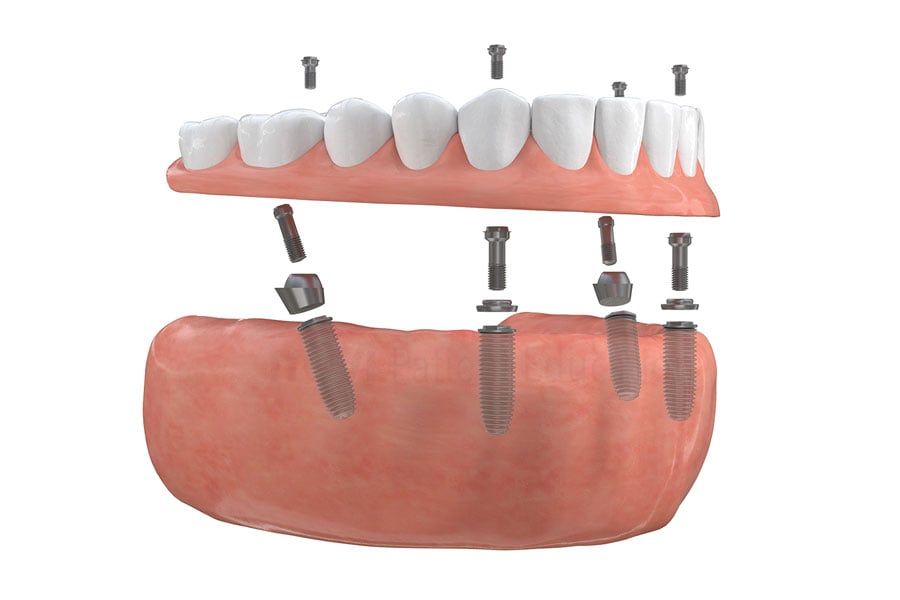
Full-Arch Implant Bridge
- A complete set of teeth fixed permanently to 4–6 dental implants per arch
- It stays in your mouth around the clock, with nothing to remove, no adhesives, and no slipping
- Bite and chew at full strength and eat any food, with no dietary restrictions
- The implant posts stimulate the jawbone, which keeps it preserved
- Designed for ideal tooth shape, size, and color, it looks completely natural
- Depending on the technique used, it's often called "All-on-4" or "teeth in a day"
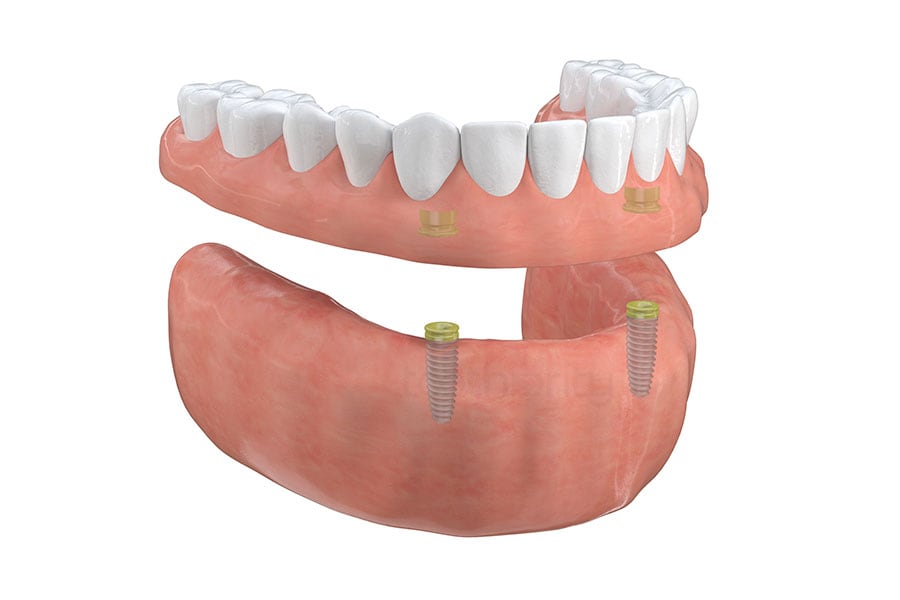
Implant-Supported Overdentures
- A full denture that snaps securely onto dental implants for stability and comfort
- At home, you can take it out to clean and maintain it, then click it back into place
- Far steadier than traditional dentures, with no slipping, rocking, or adhesives
- Eat, drink, and speak with confidence all day long
- Dr. Andre Amarante fits a supporting structure to the implants so your overdentures click into place
- A cost-effective alternative to a full-arch fixed bridge
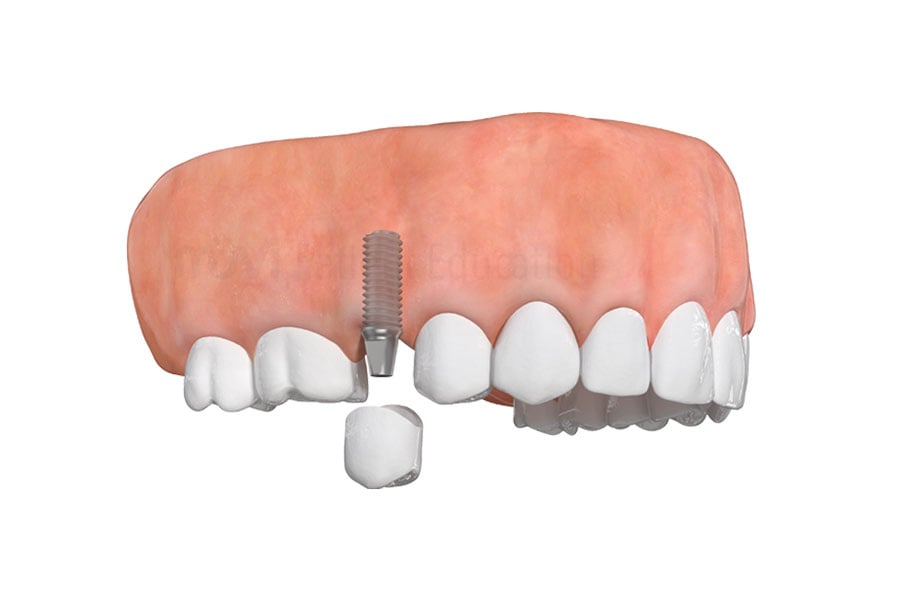
Implants vs. Traditional Dentures
- Bone preservation: Implants stimulate the jawbone and stop the deterioration that sets in beneath traditional dentures
- Stability: Anchored to the bone, implant restorations never slip, shift, or need messy adhesives
- Comfort: No sore spots from loose dentures rubbing against your gums
- Eating: Bite and chew normally, where traditional dentures cut chewing capacity by up to 75%
- Taste: Implant bridges leave the roof of your mouth uncovered, so you taste your food fully
- Appearance: Implants head off the sunken, collapsed look that appears as bone melts away under traditional dentures
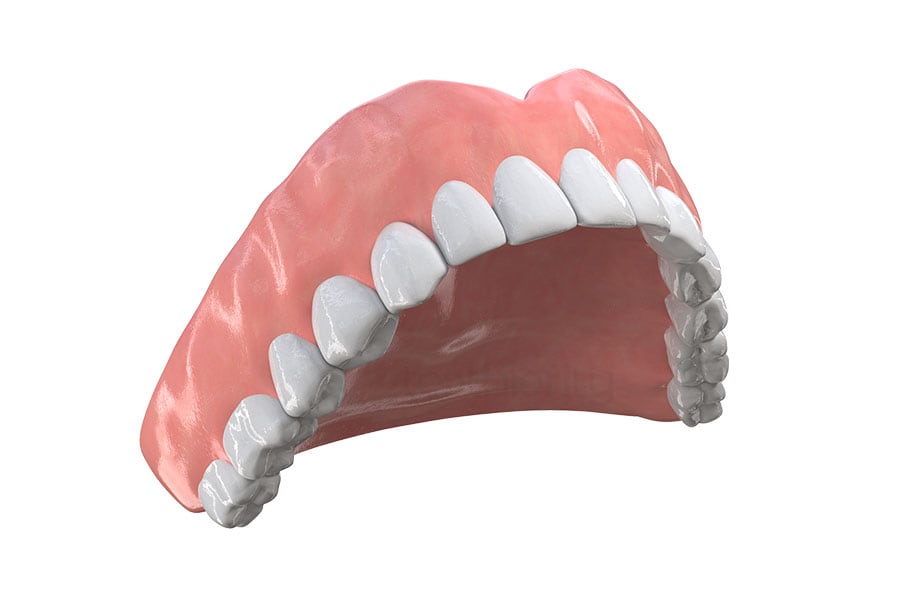
Problems with Traditional Dentures
- With no tooth roots to support it, the jawbone resorbs and shrinks, so dentures loosen over time
- As the bone changes, traditional dentures call for constant adjustment and eventual replacement
- Keeping them in place often means resorting to sticky adhesives
- Many patients struggle to eat, speak, and taste their food
- The bone loss underneath leads to a collapsed, aged facial appearance
- By replacing the root along with the crown, implant-supported restorations resolve every one of these problems
No other tooth replacement preserves your jawbone and maintains your facial structure the way dental implants do.
What to Expect at Your Visit
Visit Steps
- Comprehensive evaluation: Dr. Andre Amarante examines your mouth and jawbone with digital X-rays and CT scans
- Custom treatment plan: Your personalized plan is built around your bone density, the number of implants needed, and the type of restoration
- Implant placement: Titanium implants are surgically placed, with inhaled sedation (nitrous oxide) available for your comfort
- Healing: The implants integrate with the jawbone over several months, and temporary teeth may be provided
- Final restoration: Your custom bridge or overdenture is permanently placed or fitted
Helpful Tips
- No two treatment plans are alike, so the number of implants, healing time, and cost all hinge on your specific situation
- If additional bone support is needed, we'll plan and coordinate your care before implant placement
- Temporary teeth can be provided while you heal, so you're never left without a smile
- Follow all post-surgical care instructions to support successful healing
- Keep your oral hygiene excellent around the implant restorations
- Ask about flexible financing options to make full mouth restoration affordable
Frequently Asked Questions
Most full-arch restorations call for 4 to 6 implants per jaw, with the exact count depending on your bone density and the type of restoration you choose. A fixed bridge and a removable overdenture don't always need the same number of implants to feel secure.
Fewer, strategically angled implants can sometimes support a full arch even when bone density is limited, which is part of what makes techniques like All-on-4 possible for patients who might not qualify for a higher implant count.
Using CT imaging at your consultation at our Evanston, IL practice, Dr. Andre Amarante will determine the optimal number for your jaw, balancing stability, healing time, and cost against your specific anatomy.
In some cases, yes. Certain techniques let temporary teeth attach to the implants the same day as surgery, so you're never walking around without teeth while you heal. This is often what people mean when they ask about All-on-4 or teeth in a day.
Those temporary teeth keep you speaking and smiling with confidence during healing, while you stick to softer foods as everything settles in. Your permanent restoration goes on once the implants have fully integrated with the jawbone, typically 3–6 months later.
Whether same-day teeth are right for you depends on your bone density and overall treatment plan. Dr. Andre Amarante will let you know if you're a candidate at your consultation.
Both are excellent options, and there's no universally right answer, only what fits your priorities best. A fixed bridge stays put permanently and comes closest to the feel of natural teeth, since nothing comes out and there's no clasping or removal to think about.
An overdenture snaps on and off for cleaning, which some patients prefer for the ease of maintenance, and it can sometimes be achieved with fewer implants than a fixed bridge requires. It's also often a more cost-effective alternative to a full-arch fixed bridge.
Cost, bone density, and personal preference all play into the choice, and Dr. Andre Amarante will help you make it, walking through the tradeoffs of each option against your specific goals and budget.
Years of denture wear often bring significant bone loss, since traditional dentures sit on the gums without stimulating the bone underneath the way a natural tooth root does. Yet implant treatment is still on the table for most patients in this situation.
If additional bone support is needed, we'll plan and coordinate your care to rebuild a stable foundation before implants go in. It adds time to the process, but it's a well-established path from long-term denture wear to a permanent, implant-supported smile.
In some cases, strategic implant placement can work with the bone you have, using techniques that make the most of the density that remains. Dr. Andre Amarante will map out which approach fits your jawbone at your consultation.
From implant placement to final restoration, plan on about 4 to 8 months, with most of that time spent healing while the implants fuse with your jawbone. Surgery is done in one visit, and follow-up appointments track your progress along the way.
If additional bone support is needed first, the overall timeline stretches longer, since the graft site needs to heal before implants can be placed. This is common after years of missing teeth or denture wear, and it's built into your treatment plan from the start.
Temporary teeth carry you through healing, so you're never without a smile. Once your implants have fully integrated, your final fixed bridge or overdenture is placed and you're done.
Cost varies quite a bit with the number of implants, the type of restoration, and whether any additional bone support is needed. A full-arch fixed bridge and an implant-supported overdenture carry different price points, and Dr. Andre Amarante will walk you through both at your consultation.
The investment is real, but implant-supported teeth can last a lifetime, which makes them more cost-effective than decades of denture replacements, relines, and adjustments.
We offer flexible financing options to help make full mouth restoration fit your budget, and we'll give you a detailed, itemized estimate before you commit to treatment.
Care looks a little different depending on which type of restoration you have, but both are more straightforward than most patients expect:
- Fixed bridge: Brush twice daily and run specialized floss or a water flosser around the implants to clean under and around the bridge where a regular toothbrush can't reach
- Overdenture: Take it out each night for cleaning, brushing it the same way you would a traditional denture, and clean your gums and the implant attachments while it's out
- Both types: Avoid using the restoration to bite down on very hard foods, and stick to non-abrasive cleaning tools so you don't scratch the surface
Either way, regular dental checkups keep your implants healthy for the long term, letting us catch and address small issues before they become bigger ones.
Put loose dentures behind you for good. Schedule your full mouth restoration consultation today.