Gum Disease (Periodontal Disease) in Evanston, IL
More than half of Americans have some form of gum disease, and it remains the leading cause of tooth loss in adults. The good news is that when caught early, the damage can often be reversed. At Way Dental, we diagnose and treat every stage of periodontal disease, from early gingivitis to advanced periodontitis, helping you keep your natural teeth and protect your overall health.
What it is
A bacterial infection of the gums and supporting bone, driven by plaque buildup along and below the gum line.
Who it affects
Over 50% of U.S. adults, with risk climbing alongside poor oral hygiene, smoking, diabetes, genetics, and certain medications.
How we help
Deep cleanings and ongoing maintenance to stop progression, guided by a comprehensive periodontal evaluation, with referral to a trusted periodontist when advanced surgical care is needed.
Notice bleeding gums when you brush? That's often the first sign of gum disease. Don't ignore it.
Stages of Gum Disease
Gingivitis (Early Stage)
- The mildest form of periodontal disease
- Gums turn red and swollen and bleed easily during brushing or flossing
- Usually traced to poor oral hygiene and plaque buildup
- Reversible with professional treatment and improved home care
- Often painless, so many patients don't realize they have it
Periodontitis (Advanced Stage)
- Sets in when gingivitis goes untreated and progresses
- Gums pull away from the teeth, forming deep "pockets" that trap bacteria
- The bone and tissue supporting the teeth begin to break down
- Damage is permanent, so it can only be managed, not cured
- Can lead to loose teeth, a shifting bite, and eventual tooth loss
Warning Signs of Periodontal Disease
Watch For These Symptoms
- Gums that bleed during brushing or flossing
- Gums that are red, swollen, or tender
- Persistent bad breath (halitosis) that won't go away
- A receding gum line that makes teeth look longer than before
- Teeth that feel loose or are separating
- Pus between your teeth and gums
- A change in how your teeth fit together when you bite
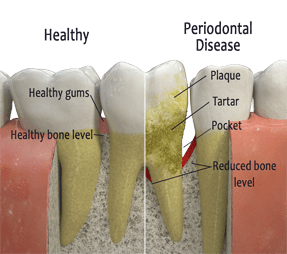
Healthy gums versus the plaque, tartar, deepening pockets, and bone loss of periodontal disease.
Important: For many patients, gum disease brings no symptoms until it is already advanced. Regular dental exams are the best way to catch it early, when treatment is most effective.
Call us promptly if you notice sudden gum swelling, loose teeth, or pus around the gum line.
What Causes Gum Disease?
How It Develops
- Bacteria combine with food to form a sticky film called plaque on the teeth
- Skip regular brushing and flossing, and plaque hardens into tartar within days
- Only a professional dental cleaning can remove tartar
- Below the gum line, tartar keeps the gum tissue chronically inflamed
- Over time, that inflammation destroys the bone that supports teeth, creating deep pockets
Risk Factors
- Poor oral hygiene: Brushing and flossing that aren't consistent
- Smoking/tobacco use: Speeds bacterial growth and impairs healing
- Diabetes: Raises susceptibility to infections, gum disease included
- Genetics: A family history can increase your risk
- Medications: Some drugs reduce saliva flow, which increases plaque buildup
- Hormonal changes: Pregnancy and menopause can leave gums more vulnerable

How to Prevent Gum Disease
Prevention Strategies
- Brush thoroughly twice a day for two minutes with a soft-bristled brush
- Floss every night, since cleaning under the gum line is essential for fighting gum disease
- Don't skip dental visits, because professional cleanings remove tartar that brushing can't
- Quit smoking, since tobacco use is one of the biggest risk factors for periodontal disease
- Eat a balanced diet, because proper nutrition supports your immune system and gum health
- Manage health conditions by keeping diabetes and other conditions well-controlled
Concerned about your gum health? An evaluation is the first step to preventing tooth loss.

How We Treat Gum Disease
The right treatment depends on how severe your condition is and on your overall health. We always begin with the most conservative approach, providing non-surgical care right here in our office. When advanced disease calls for surgical treatment, we refer you to a trusted periodontist for that specialized care.
Non-Surgical Treatment (In Our Office)
- Scaling & root planing: A deep cleaning that lifts plaque and tartar from below the gum line and smooths the root surfaces
- Antibiotic therapy: Targeted medications placed in the gum pockets to fight bacterial infection
- Periodontal maintenance: More frequent cleanings (every 3–4 months) to keep the disease under control
- Improved home care: Customized brushing and flossing guidance
Advanced Surgical Care (Referred)
- When gum disease is too advanced for non-surgical treatment, we refer you to a trusted periodontist, a specialist in surgical gum care
- The surgical procedures a periodontist may recommend can include osseous (pocket-reduction) surgery, gum grafting, bone grafting, gingivectomy, or crown lengthening
- We coordinate closely with your specialist and share your records so nothing slips through the cracks
- After surgical treatment is complete, you come back to us for ongoing periodontal maintenance to protect the results
What to Expect at Your Visit
Visit Steps
- Comprehensive exam: We measure gum pocket depths, check for bone loss, and assess your overall periodontal health
- X-rays: Digital images show bone levels and hidden problems below the gum line
- Diagnosis: Dr. Andre Amarante explains the stage and severity of any gum disease found
- Treatment plan: Together we choose the most effective and conservative approach for your situation
Helpful Tips
- Bring a list of every medication you take, since some affect gum health
- Be candid about your home care routine so we can suggest helpful improvements
- Ask about your family history, since genetics play a role in gum disease
- Don't wait for pain, because gum disease is often painless until its advanced stages
- Catching it early is the first step to preventing tooth loss
Frequently Asked Questions
Gingivitis, the earliest stage of gum disease, is fully reversible. With a professional cleaning and better daily brushing and flossing, inflamed gums can return to a healthy state.
Once gum disease progresses to periodontitis, the bone and tissue that have already broken down cannot grow back, so at that point the disease is managed rather than cured. The goal shifts to stopping further damage and protecting the support your teeth still have, which is exactly why early detection matters so much.
The bacteria that cause gum disease can pass between people through saliva, for instance by sharing utensils or cups, or through kissing. That means it is technically possible to pick up some of the same bacteria as a partner or family member who has gum disease.
Carrying those bacteria doesn't guarantee you'll develop gum disease yourself, though. Your immune system, how consistently you brush and floss, and other individual risk factors all play a role in whether the disease actually takes hold. Good oral hygiene remains your best protection, even if someone close to you has periodontal disease.
A deep cleaning, also called scaling and root planing, clears plaque and hardened tartar from below the gum line, in the pockets that a regular cleaning cannot reach. The tooth root surfaces are then smoothed so the gum tissue can reattach more tightly against the tooth.
Because this reaches below the gum line, a deep cleaning is performed under local anesthesia for comfort, and stands as the standard first-line treatment for gum disease before any more advanced care is considered.
Because the area is numbed with local anesthesia during the procedure, what most patients notice during a deep cleaning is pressure and the sound of the instruments rather than sharp pain. Tell us if anything feels sharp and we will pause and add more anesthetic. Once the numbness wears off, it is normal for the gums to feel tender or mildly sore for a few days, similar to the soreness you might feel after a particularly thorough regular cleaning.
A little planning makes the first few days easier:
- Mild soreness or sensitivity to hot and cold is common and typically fades within a few days
- Slight gum tenderness or minor bleeding when brushing can occur briefly as the tissue heals
- Over-the-counter pain relief and a soft-food diet for a day or two usually keep you comfortable
- Rinsing gently with warm salt water can soothe the gums while they recover
Most patients are back to their normal routine within a few days. If you notice pain that worsens instead of improves, or if swelling and discomfort last longer than a week, contact our office so we can take a look.
Rather than the standard 6-month schedule, patients being treated for gum disease typically need periodontal maintenance visits every 3–4 months. These more frequent cleanings remove bacteria before it has a chance to rebuild in the pockets around your teeth, which is especially important once periodontitis has set in.
Our Evanston, IL office sets the exact interval based on how your gums respond to treatment. Many patients stay on this closer schedule indefinitely to keep the disease under control, while others can eventually return to more standard visits once their gum health stabilizes.
Research has linked periodontal disease to a higher risk of several conditions beyond the mouth, including:
- Heart disease
- Stroke
- Diabetes complications
- Respiratory problems
- Adverse pregnancy outcomes
These are associations researchers have observed, not proof that gum disease directly causes any of these conditions. Still, treating gum disease is about more than saving your teeth. It's one more piece of protecting your whole-body health, especially if you already manage a condition like diabetes or heart disease.
Smoking ranks among the most significant risk factors for developing gum disease and for making it worse once it starts. Tobacco use restricts blood flow to the gum tissue, which both encourages bacteria to thrive and makes it harder for your gums to fight off the resulting infection.
Smokers who develop gum disease also tend to have deeper pockets, more tartar buildup, and greater bone loss than nonsmokers with a similar level of plaque. Tobacco use additionally slows healing after any gum treatment, so quitting is one of the most impactful things you can do for your gum health, both to prevent gum disease and to help treatment work better.
When you first start a flossing routine, especially after not flossing regularly, a little light bleeding for the first few days is normal as your gums adjust. It usually settles down within a week or two of consistent flossing.
Bleeding that continues past that point, or that happens regularly when you brush or floss, is a classic sign of gingivitis and shouldn't be ignored. Schedule an evaluation so we can assess your gum health, since the earlier gum disease is caught, the easier it is to treat.
The cost of treating gum disease depends on how advanced the disease is and which treatment you need. A deep cleaning costs considerably less than the surgical procedures sometimes needed for advanced periodontitis, and ongoing periodontal maintenance visits are priced similarly to a regular cleaning.
Before any treatment begins, our Evanston, IL office provides a detailed plan with clear costs so there are no surprises. We accept most dental insurance plans and offer financing options to help make treatment fit your budget.
Yes, though it may take a bit more diligence. Genetics can make you more susceptible to gum disease, but a family history does not make it inevitable.
Consistent brushing and flossing, regular professional cleanings, avoiding tobacco, and keeping conditions like diabetes well managed all significantly reduce your risk, even with a genetic predisposition. Dr. Andre Amarante can also watch your gums more closely at each visit if you mention a family history, so any early changes are caught right away.
Don't let gum disease steal your smile. Treating it early protects your teeth, your health, and your confidence.