Wisdom Tooth Extraction in Evanston, IL
As the last teeth to develop, wisdom teeth are also the most likely to cause problems. Without enough room to emerge properly, they can become impacted and bring on pain, infection, and damage to neighboring teeth. At Way Dental, Dr. Andre Amarante makes wisdom tooth removal safe and comfortable, using local anesthesia and, for anxious patients, inhaled sedation to keep you at ease throughout the procedure. With additional training and certification in oral and maxillofacial surgery that reach well beyond general dentistry, Dr. Andre Amarante is equipped to handle even impacted and complex extractions with confidence.
What it is
Surgical removal of one or more third molars (wisdom teeth) when they're impacted, partially erupted, or creating problems for neighboring teeth.
Who it's for
Teens and young adults, usually between ages 17 and 25, with wisdom teeth that are impacted, painful, infected, or crowding other teeth.
How we help
A digital X-ray evaluation, local anesthesia and nitrous oxide for your comfort, skilled surgical technique, and detailed post-op instructions that keep recovery smooth.
Pain or swelling flaring up in the back of your mouth? It may be time to have your wisdom teeth evaluated.
Do You Need Your Wisdom Teeth Removed?
Most people see their wisdom teeth (third molars) arrive between ages 17 and 25. If your jaw doesn't have enough room, these teeth can become impacted, trapped beneath the gum line or angled sideways. From there, impacted wisdom teeth press on neighboring teeth and cause them to shift, develop cavities, or even lose bone support.
That said, not every wisdom tooth has to come out. Dr. Andre Amarante will evaluate your X-rays and recommend extraction only when it's necessary to protect your oral health.

Signs Your Wisdom Teeth Need Attention
- Pain or pressure toward the back of your jaw
- Gums behind your last molars that are swollen, red, or tender
- Trouble opening your mouth all the way
- Bad breath or a lingering unpleasant taste near the back teeth
- One-sided headaches or earaches
- A flap of gum tissue partly covering a tooth as it erupts
- Crowding or shifting among your other teeth
What Happens if Impacted Teeth Are Left Untreated
- Infection: Bacteria slip in around a partially erupted tooth and trigger a painful infection (pericoronitis)
- Cysts: A fluid-filled sac may form around an impacted tooth and damage the jawbone and nerves
- Damage to neighbors: Pressure from impacted teeth leads to cavities or bone loss in adjacent molars
- Crowding: Wisdom teeth shove other teeth out of alignment
- Gum disease: The hard-to-clean pockets around impacted teeth become breeding grounds for bacteria
When to call us: Severe pain, swelling that reaches your cheek or neck, difficulty swallowing, fever, or pus draining near the back of your mouth.
Seek emergency care if facial swelling begins to affect breathing or swallowing, or a high fever leaves you unable to open your mouth.
The Extraction Procedure

Procedure Steps
- Evaluation: Dr. Andre Amarante studies your X-rays to pinpoint the position and condition of your wisdom teeth
- Anesthesia: Local anesthetic numbs the area, and inhaled sedation (nitrous oxide) is on hand for anxious patients
- Access: For an impacted tooth, a small incision in the gum tissue exposes the tooth and bone
- Removal: The tooth is eased out carefully, sometimes in sections, to minimize bone removal
- Closure: After cleaning, the site may be closed with dissolvable stitches to promote healing

Anesthesia & Sedation
- Local anesthesia: The go-to for straightforward extractions, numbing the area so that what most patients notice is pressure rather than sharp pain
- Nitrous oxide (laughing gas): Gentle inhaled sedation that eases anxious patients while keeping them conscious and responsive. It clears quickly, with no downtime and no need for a driver
- Learn more about our inhaled sedation
Nervous about the procedure? Local anesthesia and inhaled sedation are both available, and we'll check in with you throughout.
Before and After: Impacted Third Molars
A panoramic X-ray lets Dr. Andre Amarante see exactly how each wisdom tooth sits in the jaw before a single instrument comes out. The pair of images below belongs to one Way Dental patient. In the first, all four third molars are impacted and angled into the teeth beside them. In the second, taken after treatment, the third molars are gone and the second molars sit at the back of a healed, stable arch.
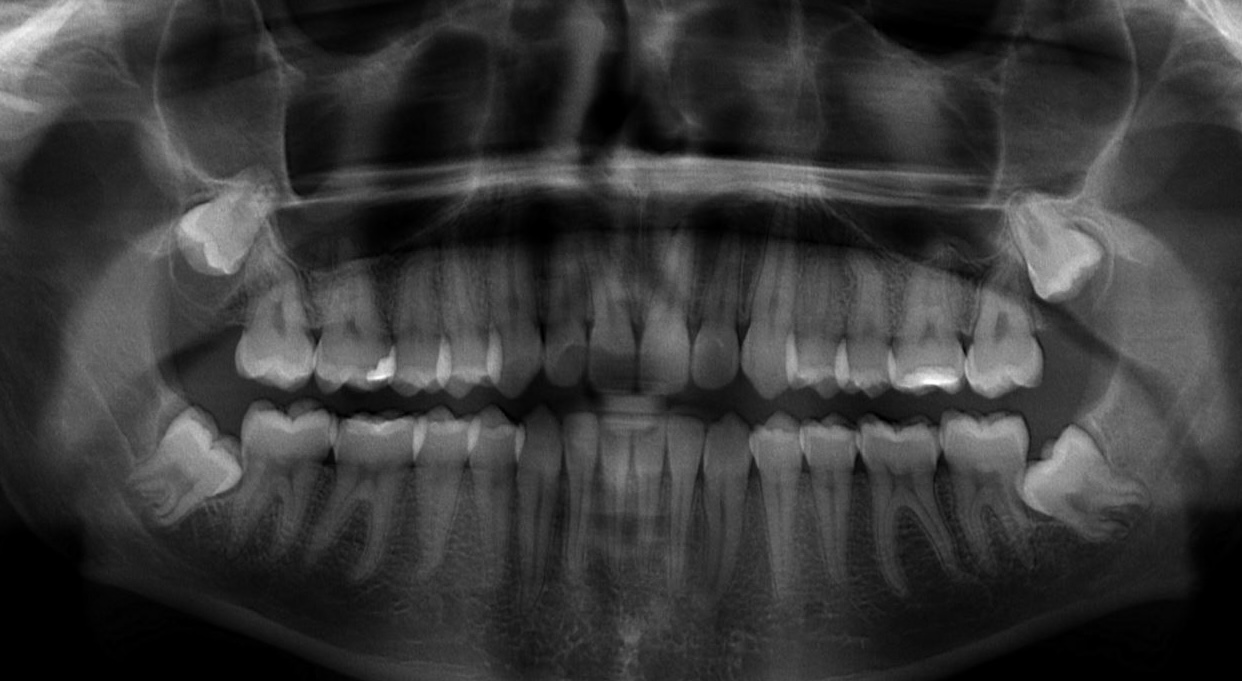
Before: four impacted third molars
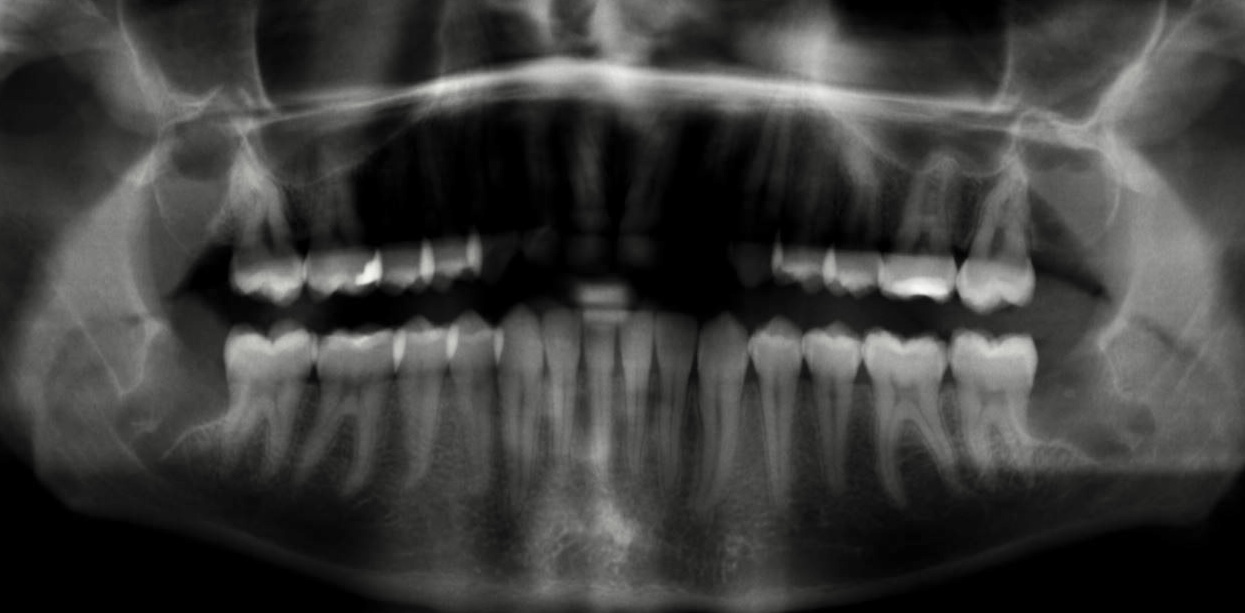
After: third molars removed, sites healed
Radiographs of an actual Way Dental patient. Every mouth is different, and Dr. Andre Amarante will review your own X-rays with you before anything is scheduled.
Surgical Training You Can Verify
Most general dentists refer impacted wisdom teeth out. Dr. Andre Amarante completed a full oral and maxillofacial surgery residency in Brazil (OSID/UFBA) before earning his DDS at New York University, so complex third molar cases are handled here, by the same dentist you already know.
He is a Fellow of the International Association of Oral and Maxillofacial Surgeons and an active member of ALACIBU (Asociación Latinoamericana de Cirugía y Traumatología Bucomaxilofacial, the Latin American Association of Oral and Maxillofacial Surgery). Read his full background.
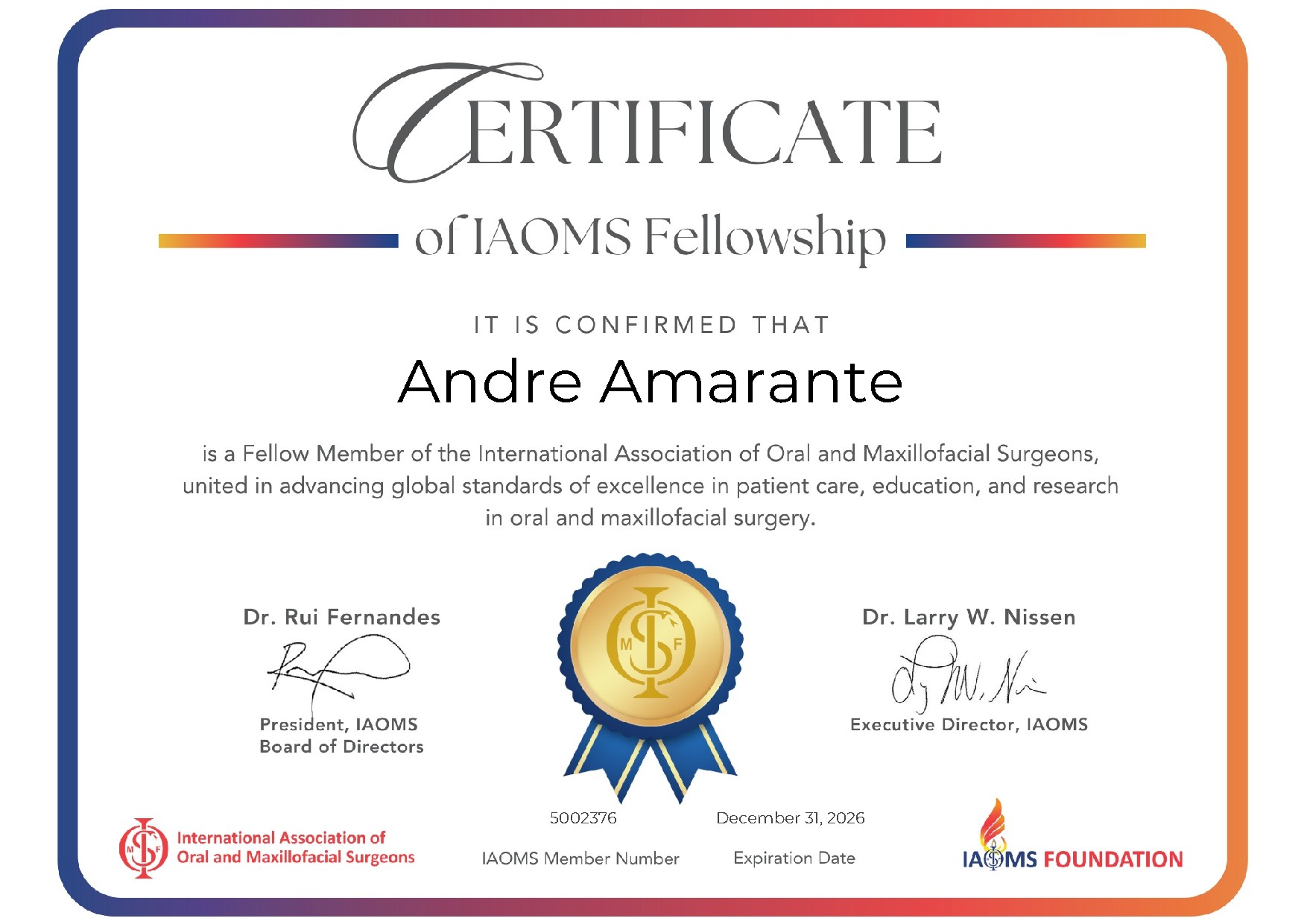
Fellow, International Association of Oral and Maxillofacial Surgeons (IAOMS)
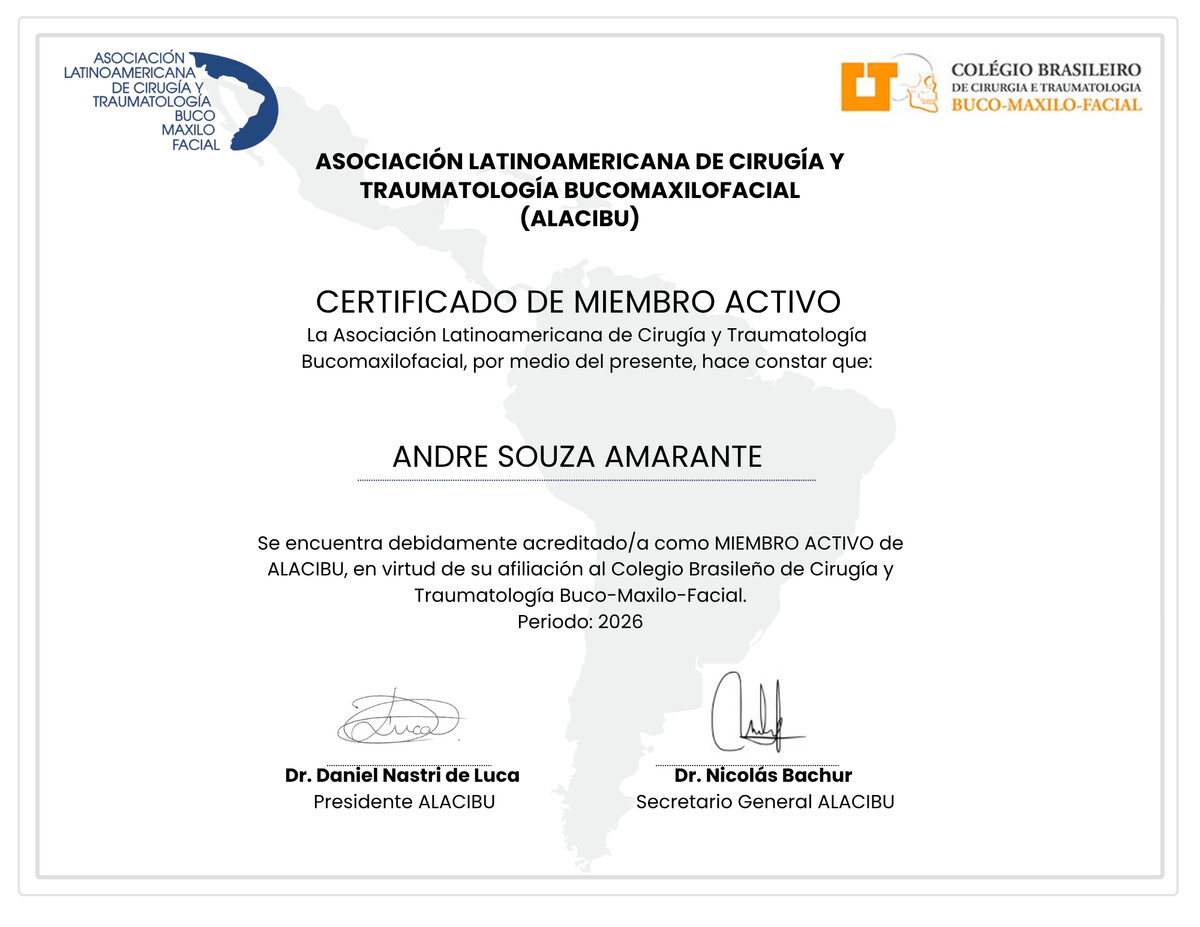
Active Member, ALACIBU (Asociación Latinoamericana de Cirugía y Traumatología Bucomaxilofacial)
Recovery & What to Expect
Recovery Timeline
- Day 1: Rest, use ice packs, and take prescribed medications. Some bleeding and swelling are normal
- Days 2–3: Swelling usually peaks before it starts to ease. Stick with soft foods (yogurt, soup, applesauce)
- Days 4–7: Most patients feel much better and can ease back to normal foods as comfort allows
- Weeks 1–2: Stitches dissolve on their own. Keep avoiding straws, smoking, and vigorous rinsing to prevent dry socket
- Full healing: The extraction site closes over 3–4 weeks, and bone fills in completely over several months

Visit Steps
- Consultation: Dr. Andre Amarante reviews your mouth and X-rays to decide whether extraction is needed
- Planning: Before scheduling, we go over the procedure, your comfort options, and costs
- Procedure day: Most extractions take 30–60 minutes
- Post-op review: We walk through detailed recovery instructions and provide prescriptions if needed
- Follow-up: A check-up visit may be scheduled to confirm proper healing
Helpful Tips
- Stock your kitchen with soft foods ahead of your procedure day
- Plan on 2–3 days off work or school to recover
- Sleep with your head propped on extra pillows to reduce swelling
- Alternate ice packs on your cheeks: 20 minutes on, 20 minutes off
- Skip straws, forceful spitting, and smoking for at least 5 days, since these can cause a painful dry socket
- Starting the day after surgery, rinse gently with warm salt water
Frequently Asked Questions
The area is numbed with local anesthesia before we begin, and inhaled sedation (nitrous oxide) is available for added comfort if you'd like extra reassurance. The local anesthetic works by blocking pain signals from the nerve at the extraction site, so what most patients notice during the procedure is pressure and movement rather than sharp pain. Tell us if anything feels sharp and we will pause and add more anesthetic.
Once the anesthesia wears off, most patients have moderate soreness and swelling for a few days, easily managed with prescribed or over-the-counter pain medication. Everyone heals a little differently, and how many teeth were removed and whether they were impacted both play a role in how you feel afterward.
We'll send you home with clear post-operative instructions and prescriptions if needed, and we're available if your discomfort feels like more than what's expected. Following those instructions closely, especially around rest and diet, goes a long way toward keeping recovery comfortable.
Often, yes. Taking out all four in a single visit means one procedure, one recovery period, and one round of sedation, rather than facing the process multiple times. For many patients, especially teens and young adults having wisdom teeth removed proactively, that single-visit approach is the simpler and more efficient path.
If only one or two are actually causing problems, though, Dr. Andre Amarante may recommend removing just those instead of taking out all four. Factors like how impacted each tooth is, its position relative to nerves, and your overall health all factor into that recommendation.
We'll discuss the best approach for your situation at your evaluation, reviewing your X-rays together so you understand exactly why a particular plan, whether that's all four at once or a more limited extraction, makes sense for your mouth.
Within 4–7 days, most patients feel significantly better, though everyone heals at their own pace depending on how many teeth were removed and how impacted they were.
- Days 1–2: some bleeding and swelling are normal as the area begins to settle
- Days 2–3: swelling tends to peak on days 2–3 before it starts to ease
- Days 4–7: comfort continues to improve and you can ease back toward normal foods
- Weeks 1–2: any dissolvable stitches disappear on their own as the site keeps closing
Soft tissue fully heals in about 2–3 weeks, while the underlying bone fills in over several months, a process you won't even notice happening. Sticking closely to your post-operative instructions during those early days makes the biggest difference in how smoothly the rest of recovery goes.
Dry socket happens when the blood clot at the extraction site gets dislodged, leaving the underlying bone and nerves exposed and causing intense, throbbing pain. Dry socket is a known complication after a tooth extraction. Avoiding smoking, straws, forceful spitting, and vigorous rinsing lowers the risk, though it can still happen even when you follow every instruction. A difficult or impacted extraction and an infection that was already present both raise the risk on their own. As with any surgery, let us know about the medicines you take when we go over your health history beforehand.
- Steer clear of straws, since the suction can dislodge the healing clot
- Avoid forceful spitting, especially in the first day or two
- Don't smoke, which slows healing and raises the risk significantly
- Skip vigorous rinsing, sticking to gentle warm salt water once you're cleared to rinse
Following these precautions for at least 5 days after surgery lowers the risk, and if you notice worsening pain a few days after surgery rather than steady improvement, call us so we can take a look.
The mid-to-late teens is when wisdom teeth are typically evaluated, often with a panoramic X-ray to see how they're developing before any symptoms even appear. Because the roots aren't fully formed yet, extraction between ages 17 and 25 is often easier with a faster recovery, since the roots haven't fully anchored into the jawbone and the surrounding bone is still relatively pliable.
Even so, wisdom teeth can be removed at any age if they're causing problems. Adults who never had trouble with their wisdom teeth in their twenties sometimes develop pain, infection, or crowding later on, and extraction remains a safe, effective option whenever that happens.
Dr. Andre Amarante will review your X-rays regardless of your age to determine the position of each wisdom tooth and whether removal now makes more sense than waiting.
Most patients set aside 2–3 days to recover before returning to their normal routine. After a simple extraction, some feel up to light activity the very next day, but surgical removal of impacted teeth usually calls for a few days of rest instead.
Either way, avoid strenuous physical activity for about a week, since raising your heart rate too soon can increase bleeding and swelling at the extraction site. Plan on taking it easy, staying hydrated, and sticking to soft foods while your body focuses its energy on healing.
If your work or school involves physical exertion, talk with Dr. Andre Amarante about timing your procedure so you have enough recovery time built in, whether that's over a weekend or during a school break.
Yes. Local anesthesia handles most wisdom tooth removals, numbing the area while you stay awake, so that what most patients notice is pressure rather than sharp pain. Tell us if anything feels sharp and we will pause and add more anesthetic. It's the standard approach for the vast majority of extractions, simple or surgical.
If you tend to feel anxious, we also offer inhaled sedation (nitrous oxide) to help you relax during the procedure, with no downtime afterward. You breathe it through a small nasal mask, stay fully conscious and responsive throughout, and the effects clear quickly once treatment is finished.
Dr. Andre Amarante will recommend the best option for your comfort based on how anxious you feel, how complex the extraction is, and your health history.
Cost comes down to how many teeth are removed, whether each extraction is simple or surgical, and whether inhaled sedation is used. Because every case is different, we review your X-rays first and then walk you through what to expect before anything is scheduled.
Most dental insurance plans cover a portion of wisdom tooth removal, and our team here in Evanston is happy to check your specific benefits ahead of time. We provide a detailed estimate before scheduling, along with financing options for flexible payment, so you can make the decision that's right for you.
Don't wait for wisdom tooth pain to get worse. An early evaluation can head off complications and make recovery easier.