Root Canal Therapy in Evanston, IL
Few treatments do more to save a natural tooth and stop the pain of infection or deep decay than a root canal. It is also among the most common and most successful dental procedures, with over 15 million root canals performed each year in the United States. At Way Dental, we pair gentle techniques with modern technology to keep root canal therapy comfortable and stress-free.
What it is
A procedure that clears infected or damaged pulp (nerve tissue) from inside a tooth, then seals it to prevent further infection.
Who it's for
Anyone with deep decay, a cracked tooth, repeated dental procedures on the same tooth, or symptoms like severe pain, swelling, or sensitivity.
How we help
Precise diagnosis with digital imaging, gentle treatment under local anesthesia, and a crown afterward to restore long-lasting strength.
Severe toothache or lingering sensitivity? Call us immediately for emergency evaluation.
Why You Might Need a Root Canal
Every tooth holds a soft tissue called the pulp, home to its nerves and blood vessels. A deep cavity, crack, or injury can breach the outside of the tooth, letting bacteria reach the pulp and cause an infection.
Left untreated, that infection can spread, form a painful abscess at the root tip, and eventually cost you the tooth. A root canal removes the infected tissue, cleans the inside of the tooth, and seals it, preserving the tooth's structure while eliminating the source of your pain.

Signs You May Need a Root Canal
Infected Tooth Symptoms
- Lingering sensitivity to hot or cold
- A throbbing or severe toothache
- Pain when you bite or chew
- Swelling in the gums, face, or jaw
- A tooth that has darkened or discolored
- A small pimple-like bump on the gums near the tooth
- Sometimes no symptoms at all, only detectable by X-ray
Benefits of Saving Your Tooth
- Efficient chewing: Keep your natural bite force and function
- Normal appearance: The tooth looks and feels natural once restored
- Protects neighbors: Adjacent teeth are spared from shifting or extra stress
- Prevents bone loss: Leaving the root in place preserves your jawbone
- Cost-effective: Saving a tooth is typically less expensive than extracting and replacing it
When to call us: Severe toothache, swelling, prolonged sensitivity to temperature, or pain that wakes you up at night. Signs like these point to a possible infection that needs prompt attention.
Seek emergency care if facial swelling spreads to the eye or neck, or if you have difficulty breathing or swallowing or a high fever.
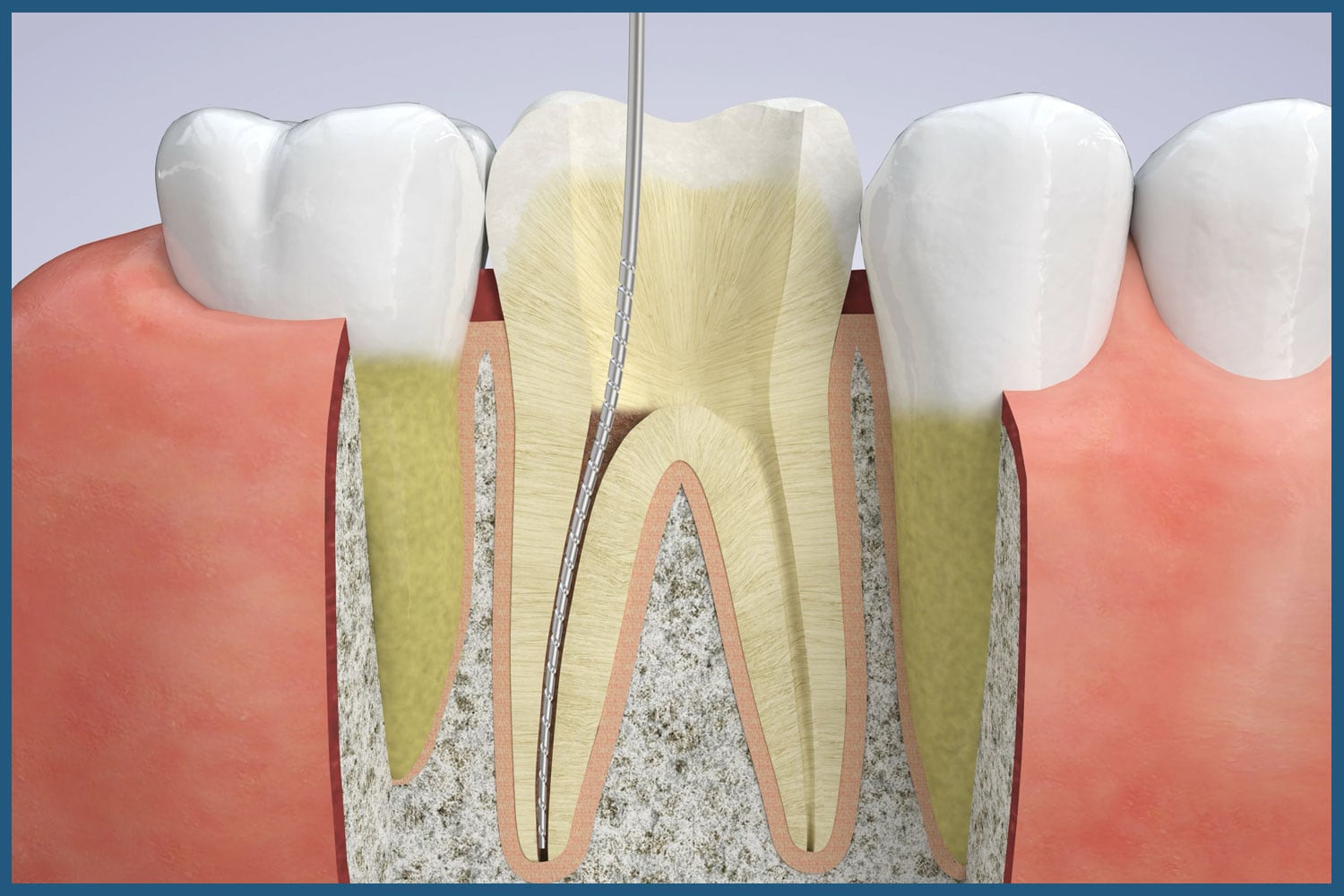
Stages of Root Canal Therapy
The Procedure
- Numbing: The tooth is numbed with local anesthetic, then an opening is made through the crown to reach the inner chamber.
- Cleaning: The infected pulp comes out, and each root canal is carefully cleaned, shaped, and disinfected, sometimes with medication placed inside.
- Sealing: A rubber-like biocompatible material fills the canals to seal them and prevent reinfection.
- Restoring: The tooth is rebuilt with a dental filling and, in most cases, a dental crown to strengthen and protect it for years to come.
Nervous about root canal pain? Under anesthesia, the treatment is generally comparable to having a filling.
What to Expect at Your Visit
Visit Steps
- Diagnosis: We examine the tooth and review X-rays to confirm that root canal therapy is needed
- Treatment plan: Dr. Andre Amarante walks you through the procedure, timeline, and cost before starting
- Procedure: Most root canals wrap up in a single visit lasting 60–90 minutes
- Follow-up: A crown appointment usually follows 2–3 weeks later to permanently restore the tooth
Helpful Tips
- If directed, take any prescribed antibiotics before your appointment
- Have a comfortable meal beforehand, since your mouth may stay numb for a few hours after
- Expect mild tenderness for 2–3 days, manageable with over-the-counter pain relief
- Hold off on chewing with the treated tooth until your permanent crown is placed
- With its nerve removed during treatment, the tooth no longer senses temperature, but otherwise functions normally
Frequently Asked Questions
Most patients report that a root canal feels similar to getting a filling. The area is numbed with local anesthesia first, so what people usually notice during treatment is mild pressure rather than sharp pain. Tell us if anything feels sharp and we will pause and add more anesthetic.
A root canal actually exists to relieve the severe pain that an infection causes, not create it. Any tenderness afterward, as the area heals from treatment, is typically mild and manageable with over-the-counter pain relief, and it fades within a few days.
A single appointment lasting 60–90 minutes handles most root canals. Dr. Andre Amarante numbs the tooth, removes the infected pulp, cleans and shapes the canals, and seals the tooth, all in that one visit for the majority of patients.
Teeth with more complex root anatomy, such as molars with multiple canals, occasionally need a second visit to finish treatment thoroughly. Dr. Andre Amarante will let you know what to expect for your specific tooth before starting, so there are no surprises about timing.
Left untreated, an infection inside the tooth does not resolve on its own. It keeps spreading, which can lead to a painful abscess, increasing swelling, and progressive bone loss around the root of the tooth.
Eventually, an untreated infection usually results in losing the tooth altogether. In rare cases, the infection can reach other parts of the body and become a serious health concern. Treating the problem promptly with a root canal is almost always simpler, less costly, and less invasive than waiting until the situation worsens.
With good oral hygiene and regular dental checkups, a properly treated and restored tooth can last a lifetime. The root canal itself removes the source of infection, and the final restoration, often a crown on a back tooth, brings back the strength you need for everyday biting and chewing.
Keeping up with your regular exams lets us monitor the tooth over time and catch any issue early, whether that means a small crack in the restoration or a new area of decay elsewhere on the tooth. Most root canal-treated teeth go on to function normally for many years without further treatment.
Saving your natural tooth with a root canal is almost always the preferred option over extraction. Keeping the tooth preserves your natural bite, stops neighboring teeth from shifting out of place, and avoids the added cost and complexity of replacing the tooth later.
Extraction only becomes the better choice when a tooth is too damaged to save, such as when a fracture extends below the gum line or there isn't enough healthy tooth structure left to support a restoration. Dr. Andre Amarante will always recommend saving the tooth whenever it's a realistic option, since a natural tooth typically outperforms any replacement.
In most cases, yes. Removing the infected pulp and reshaping the inside of the tooth during a root canal leaves less structure behind, so a crown restores the tooth's full strength and protects it from fracturing under normal biting force.
The exact recommendation depends on how much of the tooth remains and where it sits in your mouth. Because they handle less biting force than molars, front teeth can sometimes be restored with a filling alone, but back teeth almost always benefit from the added protection of a crown.
Cost depends on which tooth needs treatment and whether any additional procedures are required. Front teeth generally cost less to treat than molars, since molars have more roots and canals to clean and seal.
Before any treatment begins, our Evanston, IL office provides a detailed cost estimate and reviews it with you. We work with most dental insurance plans, and if you'd like to spread out the cost, ask about our financing options for flexible payment plans.
Root canals succeed more than 95% of the time, making them one of the most reliably successful procedures in dentistry. In the small percentage of cases where a tooth doesn't heal as expected, either a new infection develops or the original treatment didn't fully resolve the issue.
When retreatment is needed, especially for complex or surgical cases, we refer you to an endodontist, a specialist in root canal treatment, to give your tooth the best possible chance of success.
Don't let tooth pain control your life. Root canal therapy can save your tooth and deliver lasting relief.