TMJ/TMD Treatments in Evanston, IL
Jaw pain, clicking, headaches, and trouble chewing often trace back to a temporomandibular joint disorder (TMD). At Way Dental, Dr. Andre Amarante draws on a range of conservative, non-surgical treatments (custom night guards, splint therapy, and therapeutic injections among them) to relieve your pain and restore normal jaw function.
What it is
TMD affects the temporomandibular joint (TMJ, the hinge connecting your jaw to your skull), bringing pain, clicking, locking, or limited jaw movement.
Who it's for
Patients coping with jaw pain or clicking, chronic headaches or migraines, teeth grinding (bruxism), facial tension, or difficulty opening the mouth fully.
How we help
A thorough clinical evaluation and digital imaging, followed by custom oral appliances, therapeutic Botox injections, and bite adjustment. Every approach conservative and non-surgical.
Jaw pain or clicking getting in the way of daily life? A proper diagnosis is the first step toward lasting relief.
Signs You May Have TMD
Common Symptoms
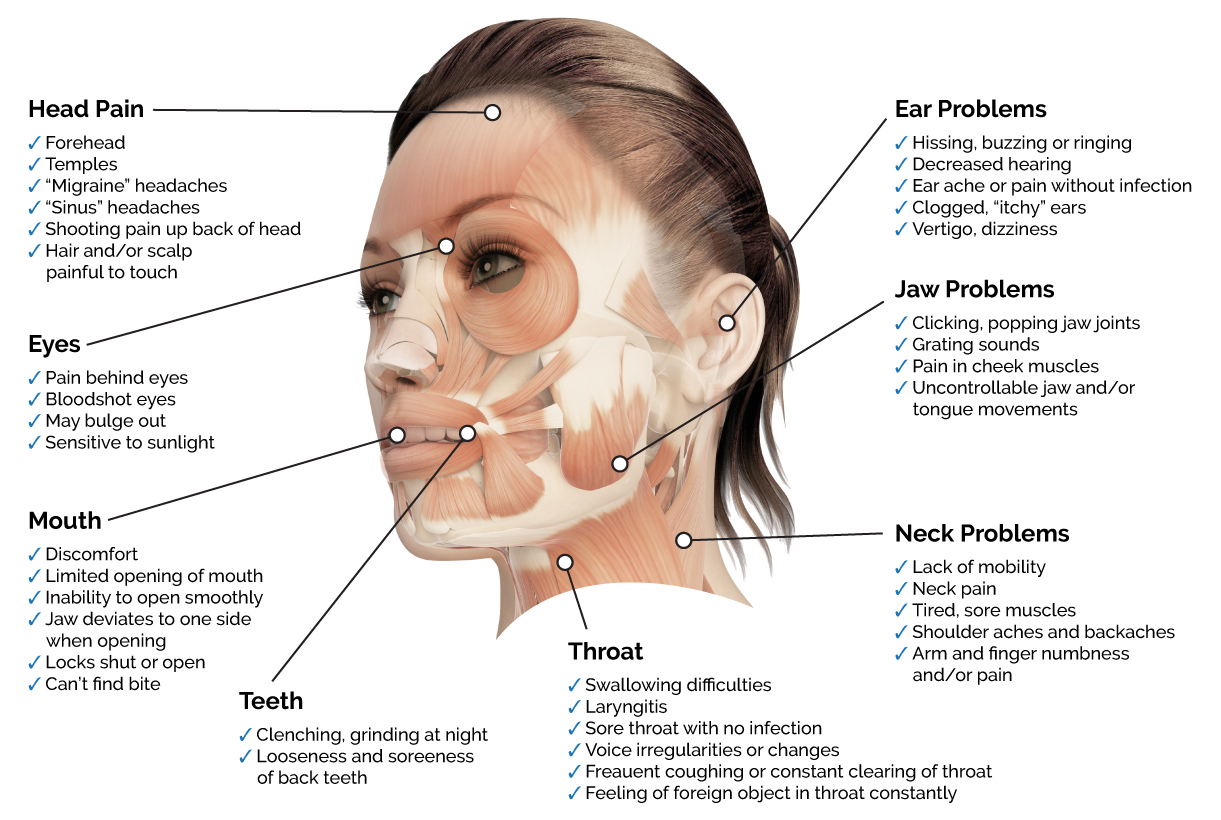
- Pain or tenderness across the jaw, face, or around the ear
- Clicking, popping, or grinding sounds as you open or close your mouth
- A jaw that locks in the open or closed position
- Difficulty or discomfort when chewing
- Chronic headaches or migraines, particularly first thing in the morning
- Earaches or a ringing in the ears (tinnitus)
- Pain or stiffness in the neck and shoulders
Common Causes
- Bruxism: Ongoing clenching or grinding of the teeth, often during sleep
- Jaw injury: Trauma from an accident, sports, or a dental procedure
- Arthritis: Degenerative changes within the TMJ joint
- Bite misalignment: An uneven bite loads the joint with unequal stress
- Stress: Tension drives jaw clenching and muscle fatigue
- Disc displacement: The soft disc inside the joint slips out of position
Treatment Options
Night Guards & Splint Therapy
- Occlusal (night) guard: A custom plastic appliance worn as you sleep, cushioning and protecting teeth from grinding and clenching
- TMJ splint: Guides the lower jaw into a position that eases stress on the joint and relaxes overworked muscles
- NTI guard: A compact appliance covering only the front teeth, so it's less bulky, triggers no gag reflex, and is proven to reduce clenching intensity
- Every appliance is custom-made by Dr. Andre Amarante for a precise, comfortable fit
- Conservative and reversible, they're often the first-line treatment for TMD
Therapeutic Injections
- Botulinum toxin (Botox): Aims to relax overactive jaw muscles to lower clenching force. This use is off-label and individual response varies
- FDA-approved for preventing headaches in adults with chronic migraine since 2011. Use for TMD-related facial or jaw pain is off-label
- Much TMJ pain traces back to overworked muscles rather than the joint, which is the rationale for treating the muscles directly
- The muscles keep working, just relaxed enough to ease the forceful contractions that drive the pain
- A quick in-office procedure, with results lasting 3–4 months
- Learn more about our therapeutic injection services
Additional Therapies
- Bite adjustment: Selectively reshaping tooth surfaces to create a more balanced bite
- Stress management: Relaxation techniques that cut down on tension-related clenching
Tips for TMD Relief at Home
- Sleep on your back to keep pressure off your jaw
- Choose soft foods that spare you heavy chewing (yogurt, soup, scrambled eggs, fish)
- Steer clear of chewing gum, ice, and hard or sticky foods
- Avoid extreme jaw movements, and support your chin when you yawn
- Apply moist heat or ice packs to the jaw for 10–15 minutes
- Practice stress-reduction techniques to ease unconscious clenching
From night guards to Botox therapy, we draw on multiple approaches to find what works best for your TMD.
What to Expect at Your Visit
Visit Steps
- Comprehensive evaluation: Dr. Andre Amarante examines your jaw, bite, and muscle function while reviewing your symptoms in detail
- Imaging: Digital X-rays or other imaging can evaluate the joint and rule out other conditions
- Diagnosis: Drawing on your exam and imaging, Dr. Andre Amarante explains your specific TMD type and its contributing factors
- Treatment plan: We review all available options (appliances, injections, bite adjustment, or a combination) and recommend a personalized approach
- Follow-up: Regular check-ins let us monitor progress and adjust treatment as needed
Helpful Tips
- For the week before your visit, journal your symptoms and note when pain is worst and what triggers it
- Bring a list of any medications or supplements you're taking
- TMD frequently improves a great deal with conservative treatment, and surgery is rarely needed
- A night guard can take a few nights to get used to, though most patients adjust quickly
- If chronic migraines affect you too, mention it, since one treatment may address both at once
Frequently Asked Questions
TMJ stands for temporomandibular joint, which is the joint itself, one on each side, that everyone has. It's the hinge connecting your lower jaw to your skull, working every time you chew, talk, or yawn.
TMD stands for temporomandibular disorder, the condition that arises when the joint, muscles, or surrounding structures aren't functioning properly. Someone with TMD might experience pain, clicking, popping, or a jaw that feels stuck or misaligned.
Plenty of people say 'TMJ' when they mean 'TMD,' but both point to the same problem. Whichever term you use, if your jaw hurts, clicks, or feels off, that's worth having evaluated.
Mild TMD symptoms can settle down with rest, soft foods, and stress reduction. A brief flare-up after a stressful week or a night of teeth grinding, for example, often eases on its own within a few days once the underlying trigger passes.
Chronic or worsening symptoms, though, especially clicking, locking, or persistent pain, usually require treatment to keep the condition from progressing. Left unaddressed, ongoing joint strain can lead to more significant discomfort or changes in how your jaw functions over time.
Stepping in early typically leads to better outcomes. If your symptoms last more than a couple of weeks or keep coming back, it's worth scheduling an evaluation rather than waiting to see if they resolve on their own.
If you clench or grind your teeth (bruxism), a night guard ranks among the most effective and affordable treatments available. It shields your teeth from damage, eases strain on the TMJ, and often relieves morning headaches and jaw soreness.
A custom night guard fits precisely over your teeth and creates a cushion between your upper and lower arches, so clenching pressure doesn't wear down enamel or overload the jaw joint. Because it's custom-made rather than a generic over-the-counter version, it tends to be far more comfortable and effective.
Dr. Andre Amarante will determine whether a night guard is right for you during your evaluation, taking a look at signs of wear on your teeth along with your symptoms and jaw function.
FDA-approved for chronic migraines since 2011, botulinum toxin injections are also used for TMD-related muscle pain, though that use is off-label, meaning the FDA has not approved botulinum toxin specifically for TMD. Because results vary from patient to patient, Dr. Andre Amarante reviews the potential benefits, limits, and possible side effects with you before starting treatment. That migraine approval is specifically for preventing headaches in adults with chronic migraine. By relaxing overactive jaw muscles, Botox aims to reduce clenching force and calm jaw pain.
Because TMD pain often traces back to overworked jaw muscles rather than the joint itself, Botox may be worth considering when muscle tension appears to be driving your symptoms, particularly alongside a night guard or other conservative care. Results typically last 3–4 months, and whether it eases headache frequency along with jaw pain depends on how much of your discomfort turns out to be muscle-related.
It's a quick, in-office treatment with no downtime, making it easy to fit into a normal schedule. Learn more on our therapeutic injections page.
The vast majority of TMD cases respond well to conservative, non-surgical treatment such as splints, night guards, and lifestyle changes, with botulinum toxin considered off-label in some cases. For most patients, these approaches bring meaningful relief without ever needing to consider surgery at all.
Surgery only enters the picture once conservative approaches have been exhausted and significant structural damage is present. Even then, it's typically considered a last resort reserved for a small subset of cases, not a routine part of TMD care.
Dr. Andre Amarante will always start with the least invasive options that fit your symptoms, monitoring your progress along the way and only discussing surgical options if conservative treatment genuinely isn't providing relief.
Many patients notice improvement within a few weeks of starting treatment, though the exact timeline depends on which approach fits your symptoms best. Night guard therapy is ongoing, worn nightly, and many patients notice less morning jaw soreness and fewer headaches within the first few weeks of consistent use.
Botox results appear within 1–2 weeks and last 3–4 months, after which repeat treatment is something we would discuss only if the first round actually helped you. Other conservative treatments, like bite adjustment or stress management techniques, tend to build gradually as habits change and the jaw settles into a healthier pattern.
Dr. Andre Amarante will monitor your progress and adjust your plan as you improve, whether that means continuing your current approach, adding another treatment, or scaling back once symptoms have settled.
Stress is one of the most common contributing factors, often fueling unconscious jaw clenching and muscle tension that strain the TMJ over time. Many people clench or grind without even realizing it, especially during sleep or while concentrating on a stressful task.
Managing it through relaxation techniques, exercise, and adequate sleep can significantly reduce TMD symptoms. Simple habits, like noticing when your jaw is tense during the day and consciously relaxing it, can also make a meaningful difference over time.
Coverage varies by plan. Dental insurance often covers night guards and occlusal appliances, while Botox for TMD may fall under medical insurance when documented as a medical necessity, which means two treatments for the same condition can sometimes be billed in two different ways.
Our Evanston office will help you understand your benefits before treatment begins, so you have a clear picture of your out-of-pocket cost before committing to a plan. If a portion of treatment isn't covered, we're happy to talk through options that keep care within reach.
Both are custom oral appliances, but they're designed to do slightly different jobs. An occlusal (night) guard is worn as you sleep and mainly cushions and protects your teeth from the wear and pressure of grinding and clenching. A TMJ splint goes a step further: it guides your lower jaw into a position that eases stress on the joint itself and relaxes overworked muscles, rather than simply protecting enamel.
In practice, the two overlap quite a bit, and which one makes sense for you depends on whether your main problem is tooth wear, joint and muscle strain, or a combination of both. Dr. Andre Amarante custom-makes every appliance for a precise, comfortable fit, and will recommend whichever type, or combination, best addresses what's actually driving your symptoms.
Both options are conservative and reversible, meaning they don't alter your teeth or jaw permanently and can be adjusted or stopped at any time. That makes them a common first step in TMD treatment before considering anything more involved.
Stop living with jaw pain. Schedule a TMJ evaluation and discover which treatment is right for you.