Cracked Teeth in Evanston, IL
Diagnosing a cracked tooth can be tricky. The pain often comes and goes, and the crack itself may stay invisible to the naked eye. That's why Dr. Andre Amarante at Way Dental relies on advanced imaging and magnification to detect and treat cracked teeth, pinpointing the exact location and severity of the fracture. Treating it early is key to saving the tooth and keeping the crack from spreading.

What it is
A fracture in a tooth, anywhere from a harmless surface crack to a deep split reaching into the root. Cracks can appear suddenly after trauma or build slowly over time from grinding and wear.
Who it's for
Anyone with intermittent pain when chewing, temperature sensitivity, or unexplained discomfort in a tooth, particularly the back teeth where cracks show up most.
How we help
Advanced diagnostics, including magnification, transillumination, and digital imaging, to locate the crack, then targeted treatment aimed at saving the tooth whenever possible.
Left alone, cracked teeth don't heal and can worsen fast. Call us for an evaluation before the crack spreads.
How to Tell If Your Tooth Is Cracked
- Sharp pain when you bite that fades the moment you release
- Pain that comes and goes with no clear pattern
- Sensitivity when eating or drinking anything hot, cold, or sweet
- Discomfort while eating that you can't trace to one tooth
- Swelling in the gum beside the affected tooth
- Most cracks turn up in the back teeth (molars and premolars)
Common Causes
- Teeth grinding (bruxism): Ongoing clenching and grinding wear enamel down over time
- Biting hard objects: Ice, unpopped popcorn kernels, hard candy, or pens
- Large fillings: With less natural structure left, heavily filled teeth crack more easily
- Trauma: Falls, sports injuries, and accidents
- Temperature extremes: Hot food chased immediately by ice-cold drinks
- Age: Teeth grow more brittle over time, so cracks are most common after age 50
Types of Cracks
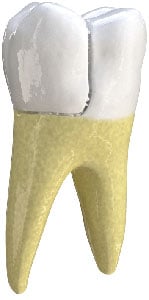
Fractured Cusp
A fractured cusp happens when part of the tooth's cusp splits away or breaks off completely. Because the root usually stays unaffected, a full crown can generally repair the damage. If the damaged portion of the cusp hasn't already come off, Dr. Andre Amarante may remove it.
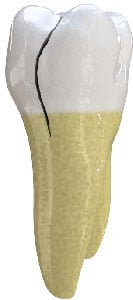
Cracked Tooth
A cracked tooth is an incomplete fracture running through the chewing surface, and it can travel down toward the gum line or even the root. Catching this kind of crack early is essential to prevent further damage. Treatment hinges on how far the crack extends, though a root canal procedure is often needed to restore the tooth.
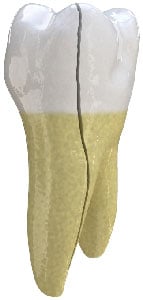
Split Tooth
Left untreated, a cracked tooth can advance into a split tooth: a complete fracture running from the crown all the way through the root. At that point the tooth's dentin has separated into two distinct sections. Since this usually develops from a cracked tooth over time, a severe enough fracture means the tooth will need to be extracted.
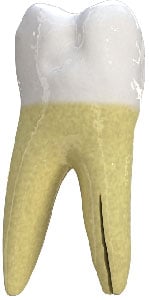
Vertical Root Fracture
A vertical root fracture begins at the root and works its way up toward the crown. Symptoms typically stay hidden until the fracture becomes severe. Extraction is often required, though in some cases endodontic surgery can save a portion of the tooth.
Treatment Options

How We Treat Cracked Teeth
- Crown: For fractured cusps and minor cracks, a crown binds the tooth together and stops the crack from spreading
- Root canal + crown: Once a crack reaches the pulp (nerve), root canal therapy clears the damaged tissue and a crown follows
- Bonding: For minor surface cracks (craze lines) that are cosmetic, not structural
- Extraction: When a tooth is split below the gum line or the crack runs deep through the root
- Endodontic surgery: In select cases, we may refer you to an endodontist for surgical treatment that saves a portion of a vertically fractured root
How to Prevent Cracked Teeth
- Keep hard objects out of your mouth: ice, unpopped popcorn kernels, pens, and hard candy
- If you grind or clench overnight, ask Dr. Andre Amarante about a night guard
- Wear a mouthguard for contact sports
- Never use your teeth as tools for opening packages or tearing tape
- Have large, aging fillings evaluated, since a crown may be needed to reinforce them
Today's small crack can become tomorrow's big problem. Early treatment is the best way to save your tooth.
What to Expect at Your Visit
Visit Steps
- Symptom review: Dr. Andre Amarante asks where your pain is, what triggers it, and how it patterns
- Clinical exam: Bite tests, percussion, and transillumination (shining a bright light through the tooth) help locate the crack
- Imaging: Digital X-rays, and possibly CBCT (3D) imaging, gauge the depth and direction of the fracture
- Diagnosis: Dr. Andre Amarante identifies the crack type and walks you through the best treatment option
- Treatment: Many cracked teeth are treated the same day, and the sooner that happens, the better the outcome
Helpful Tips
- Note which side hurts if you can, but don't worry if you can't pinpoint the exact tooth
- Chew on the other side until your visit
- Over-the-counter pain medication can keep discomfort in check
- Craze lines (tiny surface cracks on front teeth) are very common and usually need no treatment
- The earlier a crack is caught, the more treatment options you have, so don't wait for the pain to worsen
Frequently Asked Questions
No. Teeth, unlike bones, can't repair themselves, so a crack won't heal and will almost always get worse over time. Bone knits itself back together after a break, but enamel and dentin have no such mechanism, which means a crack stays open and keeps working deeper with ordinary chewing.
What begins as a hairline crack can travel toward the gum line and eventually split the tooth entirely, and at that stage extraction becomes the only option. Bacteria can also find their way into the crack and reach the nerve, turning a structural problem into an infection.
That is exactly why early diagnosis and treatment are so important with cracked teeth. Caught early, a crack is often handled with a crown that binds the tooth together. Left alone, the same tooth can end up needing far more, and sometimes needing to come out.
Biting down flexes the tooth and opens the crack slightly, which irritates the pulp (nerve) inside the tooth. Releasing the bite closes the crack and the sharp pain stops just as suddenly as it arrived. Many patients notice the jolt on release rather than on the bite itself.
That on-and-off pattern is one of the hallmark signs of a cracked tooth, and it is also what makes cracks so difficult to pin down. The pain often comes and goes with no apparent trigger, so a cracked tooth can go unnoticed for months while the fracture quietly grows.
Temperature sensitivity shows up because the crack lets hot and cold reach the nerve more easily than intact enamel ever would. If you have been getting unexplained twinges when you chew or sip something cold, it is worth having the tooth examined even if everything feels fine on the day of your appointment.
In many cases, yes. That comes down to the type and extent of the crack, and determining the location and severity of the crack is what decides the course of action for the tooth.
Root canal therapy and a crown successfully treat fractured cusps and many cracked teeth. When part of the chewing surface splits away and the root is untouched, a crown on its own is often enough. When the crack has reached the pulp, root canal therapy clears the damaged tissue first and the crown follows. Split teeth and some vertical root fractures may require extraction, though in select cases we may refer you to an endodontist for surgery that can save part of a vertically fractured root.
Dr. Andre Amarante uses magnification, transillumination, and digital imaging to trace exactly where the crack runs before recommending anything. He will evaluate your specific situation and discuss all available options, including what tooth replacement would look like if the tooth turns out not to be savable.
Craze lines are tiny, shallow cracks in the outer enamel. Extremely common, especially in adults, they're usually just a cosmetic concern. They stay within the enamel, they do not reach the nerve, and they do not weaken the tooth, which is what separates them from the kind of cracked tooth that needs treatment.
They cause no pain and need no treatment unless they bother you aesthetically, in which case veneers or bonding can help. The reason we still point them out during an exam is so you know what you are looking at in the mirror and can stop worrying about it.
Your back teeth do the heavy lifting. During chewing, the back teeth (molars and premolars) absorb the highest biting forces, and those forces concentrate on the cusps and grooves of the chewing surface. That is why cracks most often appear in the posterior or back teeth rather than the front ones.
Large fillings compound the problem. A tooth that has been restored more than once has less natural structure holding it together, so the remaining walls flex further under pressure. Heavy forces plus reduced tooth structure make them significantly more prone to cracking than front teeth.
Grinding and clenching stack more stress on those same teeth, night after night. If you grind, a night guard is one of the most practical steps you can take against cracked teeth, and it is worth raising at your next checkup.
An untreated crack keeps spreading. Every bite flexes the tooth a little more, driving the fracture toward the gum line and the root, and there is no point at which it settles down on its own.
Two things tend to follow. Over time, bacteria can seep into it and infect the pulp, which leads to an abscess along with the swelling and severe pain that come with it. Or the crack simply runs its course and the tooth can split in two, leaving extraction as the only option, at which point you are looking at replacing the tooth rather than repairing it.
Treating the crack early, while the tooth can still be saved, always beats waiting. The stage where a crown alone will do the job is the simplest, most comfortable, and least expensive version of this problem, and that window narrows as the crack grows.
A crown ranks among the most effective treatments for a cracked tooth, holding it together and preventing the crack from spreading. It works by wrapping the whole tooth, so biting forces are carried by the crown instead of prying the fracture wider with every meal.
Timing depends on how deep the crack has gone. If the fracture has not reached the nerve, a crown by itself is often the entire treatment. When the crack has reached the nerve, root canal therapy comes first, then the crown protects what remains of the tooth.
Dr. Andre Amarante will determine whether a crown alone is enough or root canal treatment is also needed, and he will tell you which before any work begins.
It depends on what the crack turns out to be, because fixing a cracked tooth is not one single procedure. Bonding a shallow surface crack sits at one end of the range, a crown for a fractured cusp sits in the middle, and root canal therapy followed by a crown sits at the other. Until we can see how far the fracture extends, any figure would be a guess.
So we start with an exam and imaging, then Dr. Andre Amarante explains what he found and what he recommends, and you get a clear estimate before treatment begins. If you have insurance, we will estimate your share and submit the claim for you.
One thing worth knowing is that waiting rarely saves money with cracked teeth. A crack treated early is almost always the least expensive version of the problem, while the same tooth months later may need root canal therapy or replacement entirely. For patients in Evanston, IL who would rather spread the cost out, our financing options include payment plans and an in-house savings plan for anyone without dental insurance.
Don't brush off tooth pain that comes and goes. It could be a cracked tooth. Call us for an evaluation.